Mail-in Ballots: Flowcharting the Supreme Court's Choose-Your-Own-Misadventure
Summarizing oral argument in a "bonkers" case via comparative flowcharts.

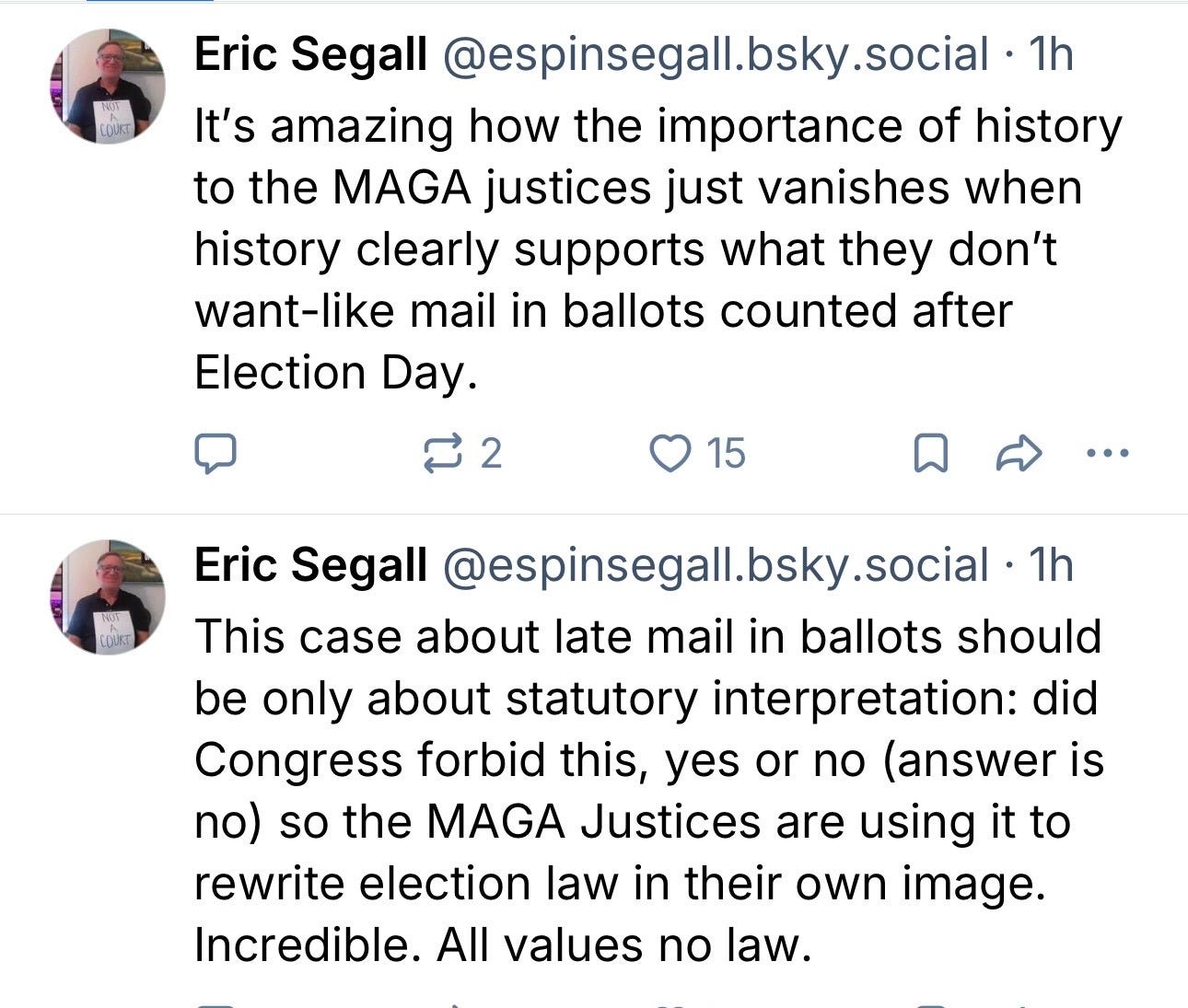
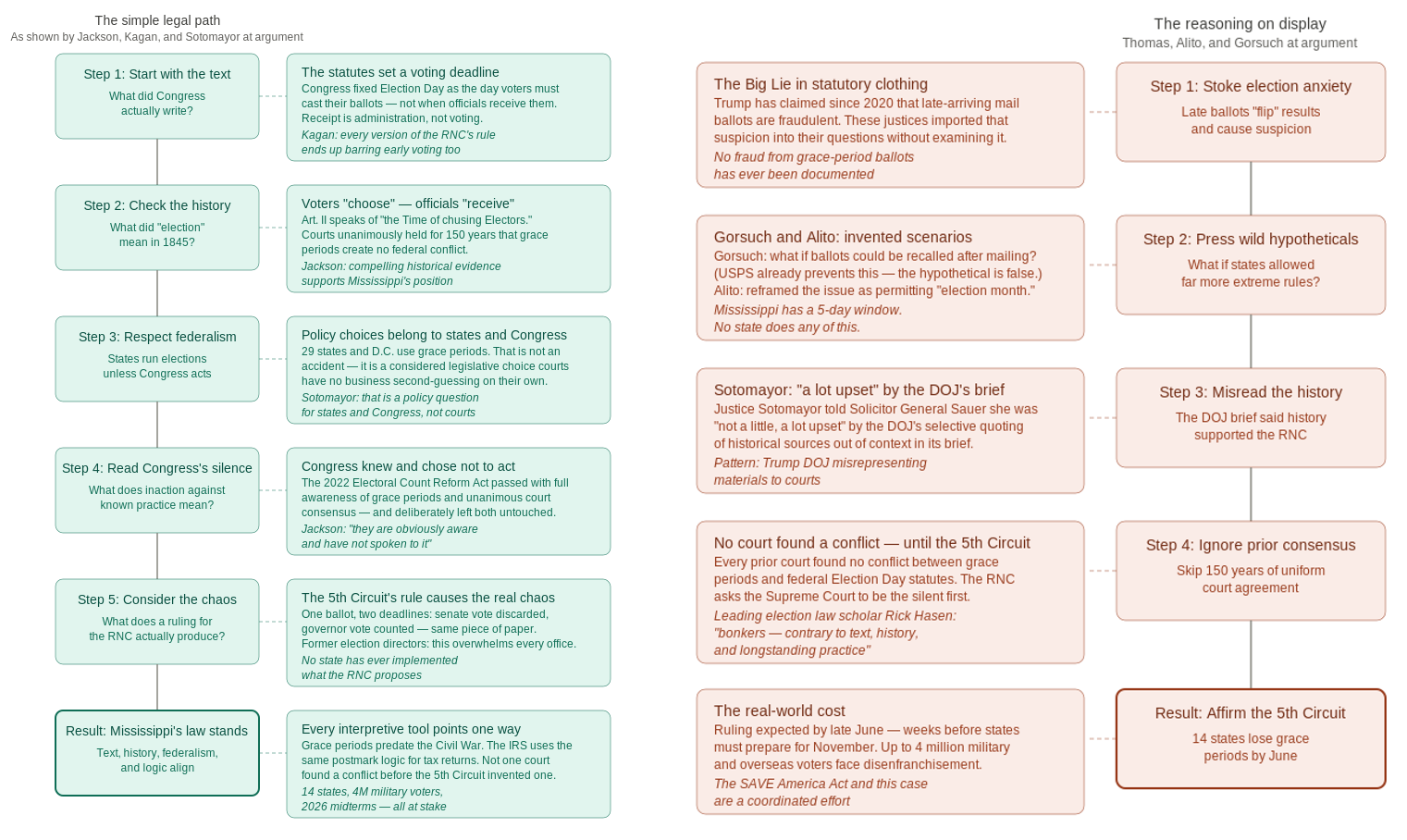
Yesterday, the Supreme Court heard oral argument in Watson v. Republican National Committee — a case about whether federal law requires mail-in ballots to be received by Election Day, or only cast by it. Mississippi allows a five-day grace period for timely-mailed ballots. A ruling against Mississippi could end similar practices everywhere, affecting 14 states directly (and another 15 states to a lesser extent), stripping protection from millions of voters, and landing weeks before states must prepare for the 2026 midterm elections. To provide you with a bit of introductory flavor, here are two entirely on-target posts from Georgia State Law Professor Eric Segall during the oral argument.
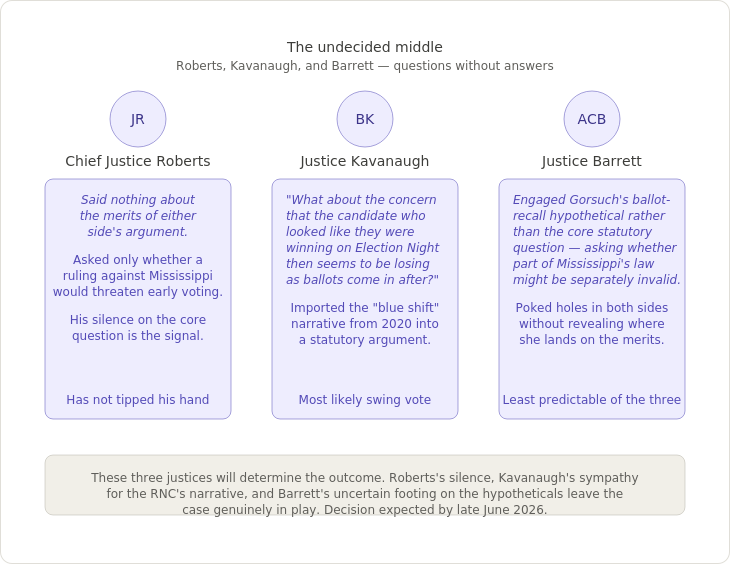
One case. Nine justices. Three groups of three?
I’m glad you’re here. I’m grateful you’re engaged. Here and everywhere. — James
This is a great way to break down the arguments. Very clever.
It is interesting that right-leaning justices would cry out in their dissents regarding SDP rights, the liberal justices were engaging in judicial overreach, and that the groups desiring the rights should go out and lobby/vote (Obergefell, Lawrence, etc.). But at almost every opportunity , those same justices reduced voting rights (especially for marginalized groups), making it harder for those groups to do the very thing they “wanted” them to do. Almost as if those dissents were just false pretenses.