SCOTUS Plate Tectonics
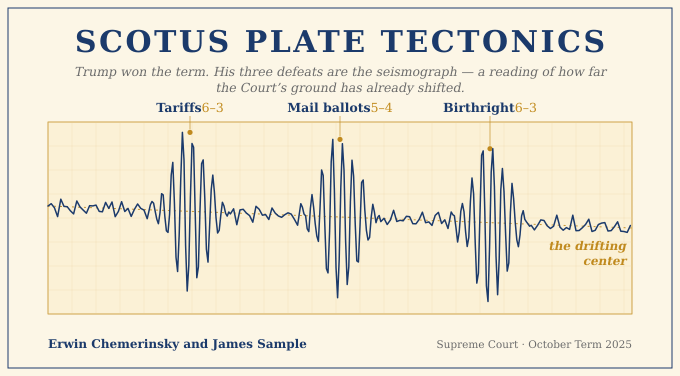
Trump won the term. His three defeats are the seismograph — a reading of how far the Court's ground has already shifted.

By Erwin Chemerinsky and James Sample
One of the most important lessons from the just completed Supreme Court term is just how far the most conservative justices are willing to go in siding with President Donald Trump and allowing unchecked executive power.
Donald Trump won most, though not all of the cases involving separation of powers, but in every case there were at least three justices and often four on his side.
There was not a single case where Justices Clarence Thomas or Samuel Alito voted against President Trump.
As we are celebrating the 250th anniversary of the Declaration of Independence, which was all about protesting the abuses of power by the King of England, it is stunning to see the conservative justices seeking to give the President unchecked power.
There were many cases, all 6-3 decisions, where the conservatives voted in favor of broad presidential power. Last week, the Supreme Court upheld President Trump’s unilaterally revoking the Temporary Protected Status for over 300,000 people from Haiti and Syria, which is likely to lead to their summary deportation and put many lives in jeopardy. The Court also allowed the Trump administration to deny admission into the country of those seeking amnesty from the United States.
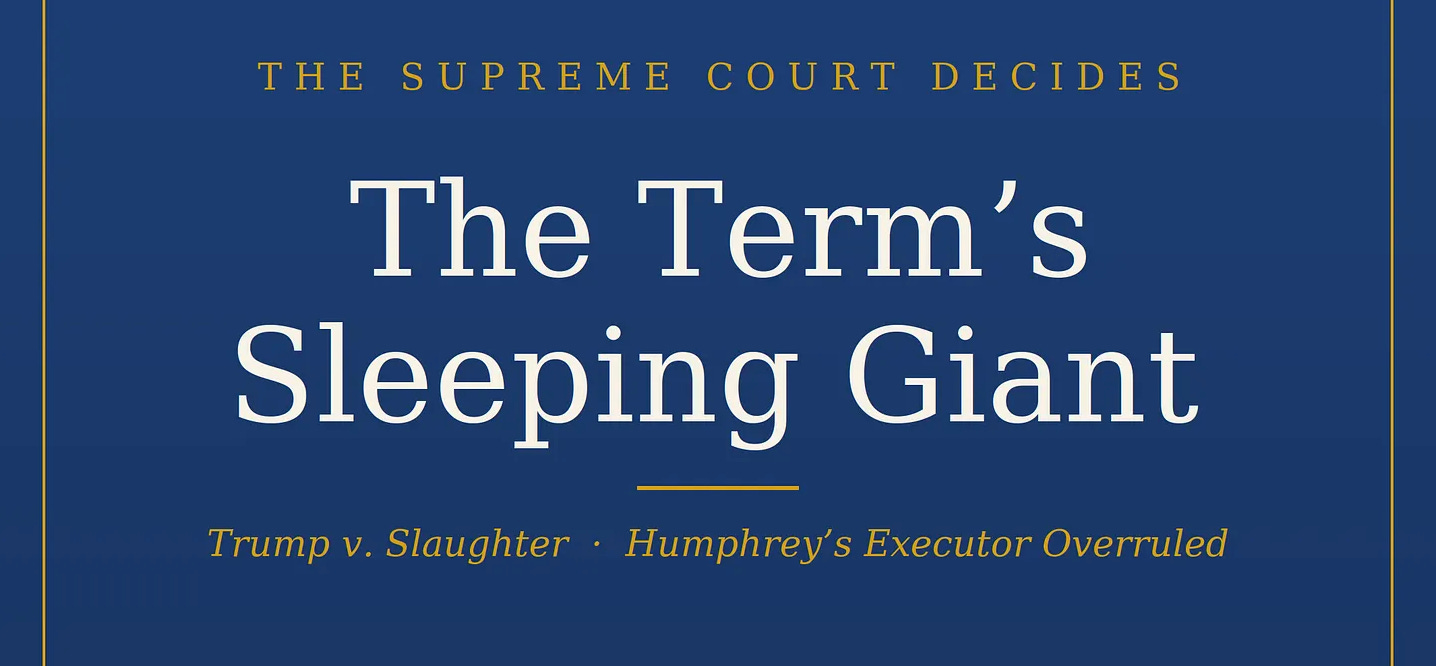
On Monday, the Court overruled a 90 year old precedent, Humphrey’s Executor v. United States, which held that Congress could prevent the removal of agency heads unless there was good cause for firing. The Court embraced the unitary executive theory, which accords the President control over the entire executive branch of government. This is an enormous expansion of presidential power and lessening of the ability of Congress to put checks on federal administrative agencies.
Even when five justices held that Federal Reserve Board Governor Lisa Cook could not be removed from office without giving her notice of the charges against her and an opportunity to be heard, four justices would have allowed the President to summarily fire her. They seemingly would allow the President to fire literally anyone in the executive branch of government, making unconstitutional even civil service protections that have existed for a century and a half.
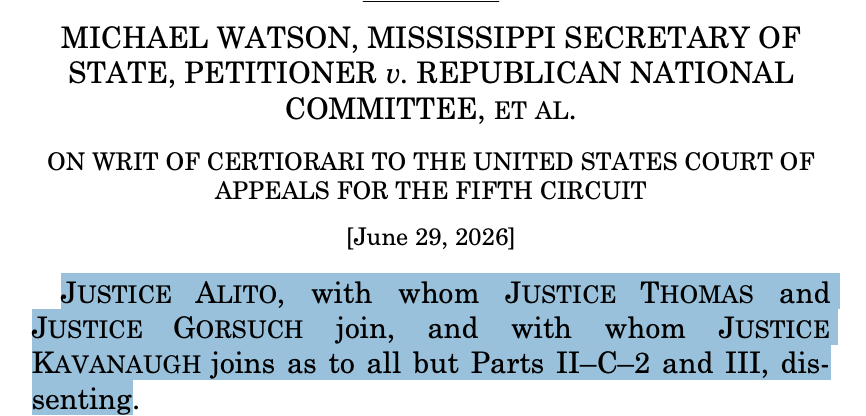
In Watson v. Republican National Committee, decided this week, the President’s party asked the Court to void the grace periods that Mississippi and many states use, to varying extents, to count ballots postmarked by Election Day and received shortly after. These are state rules that protect military and overseas voters among millions of others and that long predate any of today’s disputes. The theory was that an 1845 statute setting Election Day silently requires every ballot to be in hand by that day. The Court said no, five to four. Consider for a moment, that it registered as a surprise that only four justices voted for a widespread, longstanding, pro-voter status quo practice.
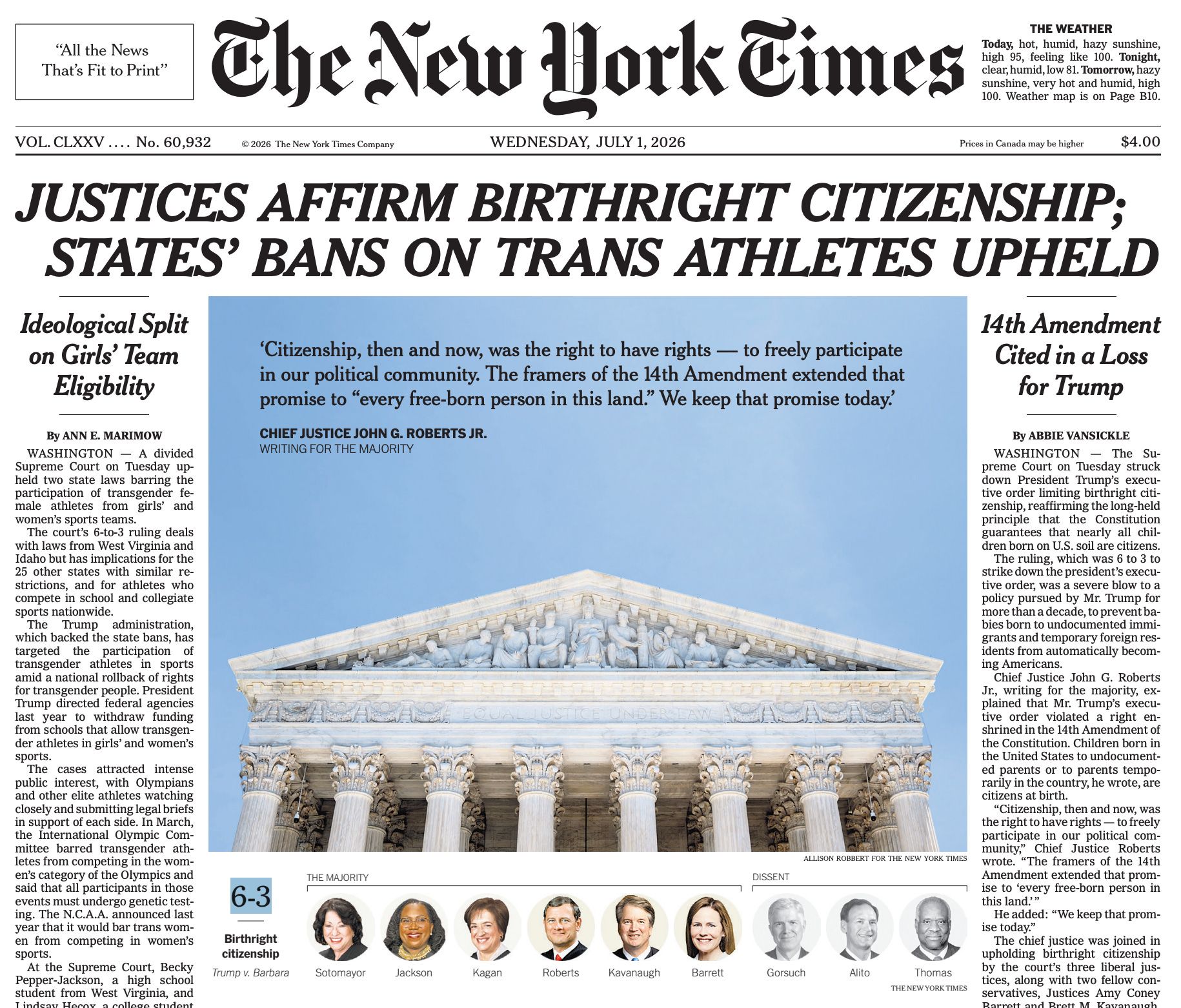
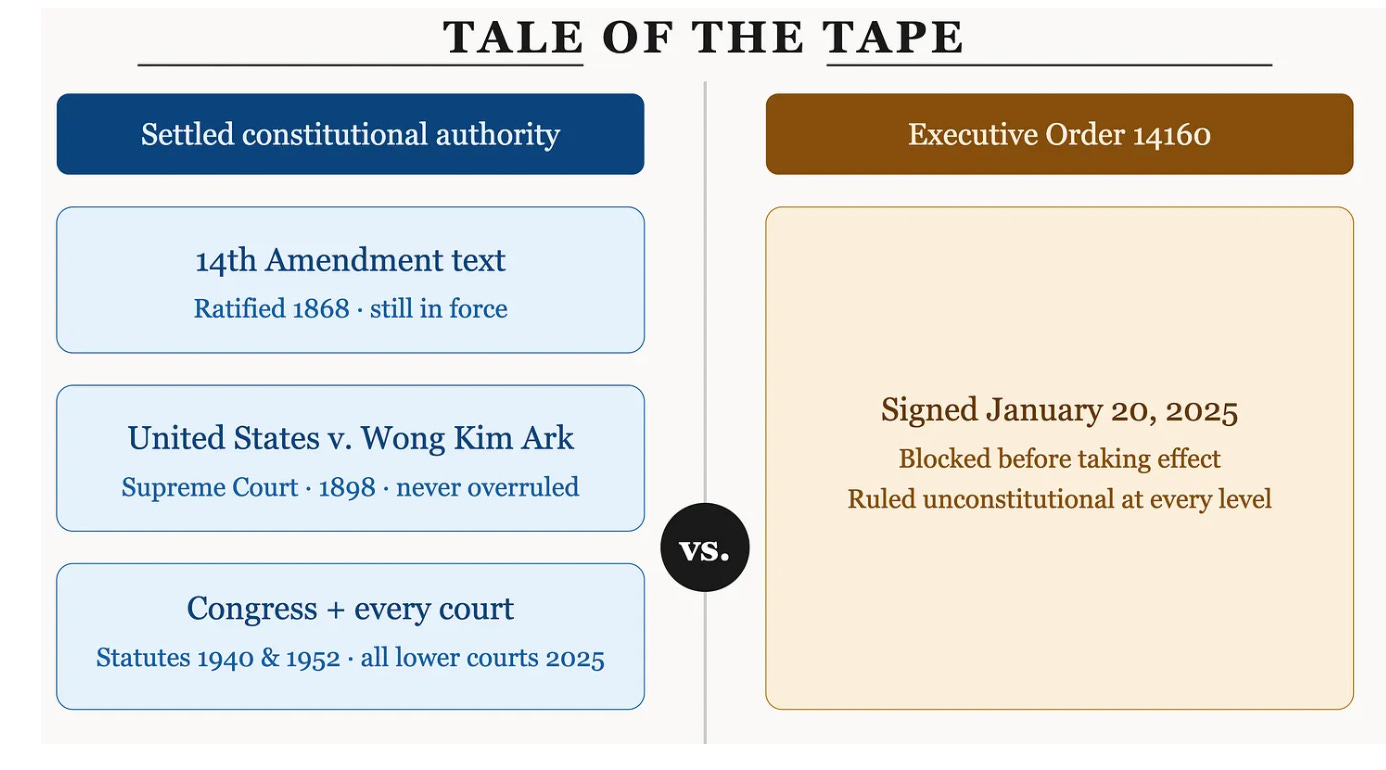
Similarly, when the Court found President Trump’s executive order limiting birthright citizenship unconstitutional, four justices disagreed with that conclusion (though Justice Brett Kavanaugh would have invalidated the executive order as violating a federal law.) This is a case that should have been 9-0 against the President. The Fourteenth Amendment, ratified in 1868 to bury the Court’s tragic decision in Dred Scott v. Sandford, could hardly be plainer: all persons born here and subject to its jurisdiction are citizens.
In 1898 in United States v. Wong Kim Ark, the Court held that all born in the United States are American citizens. American history, the text of the Fourteenth Amendment, precedent, and tradition all support allowing birthright citizenship and make the Trump executive order unconstitutional.
But the most conservative justices – Thomas, Alito, and Gorsuch – dissented and would have allowed the President to rewrite the Fourteenth Amendment. Justice Samuel Alito took the astounding position that the President even could revoke citizenship retroactively, taking away citizenship from those in the past who were born to those who were in the country on visas or who were undocumented. Justice Alito wrote that the Court “has made a serious mistake.”
Likewise, in February, in Learning Resources v. Trump, the Court held that a 1977 emergency statute that never uses the word “tariff” did not authorize the President to tax nearly every good entering the country. In the nearly fifty years since Congress passed that law, no president had read it to contain a tariff power at all. The authority to tax imports is Congress’s, and an emergency statute does not quietly surrender it. But the vote was six to three.
Three justices – Thomas, Alito, and Kavanaugh -- would have let the President read a power to tax the globe into a statute that never mentions taxes. These are jurists who demand that Congress speak with unmistakable clarity before an agency may tackle a major question, before a State can be stripped of the sovereign immunity the Court invented for it, before a civil-rights statute will yield a remedy to the very person it protects. Faced with the far larger claim that one man may tax all ofAmerican trade based on a statute’s silence, three of the justices were ready to say yes.
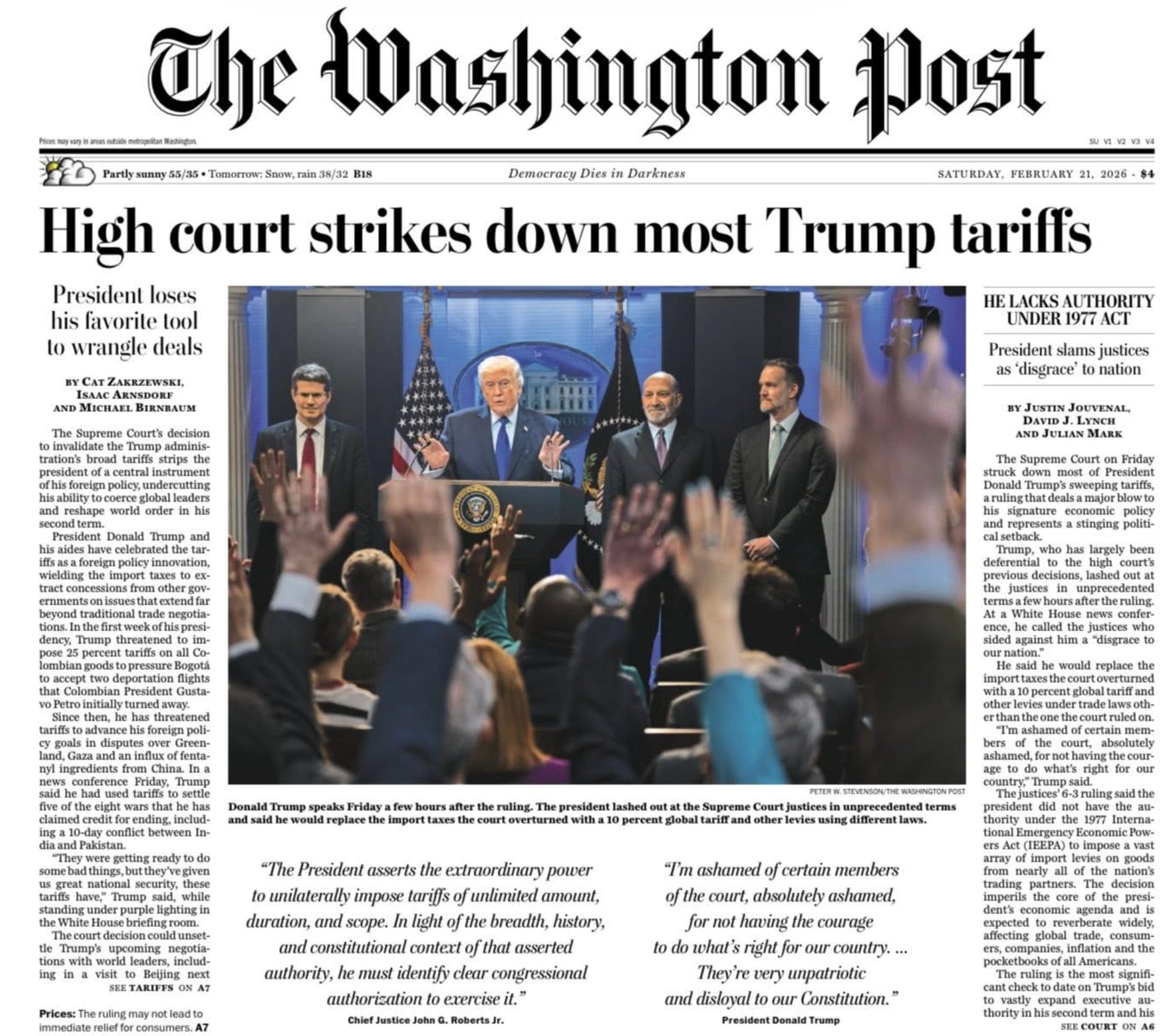
In all of these cases, the President tried to make himself the decider of a question the Constitution hands to someone else. The President won some of these cases, 6-3, and lost some of these cases. But the constant was how the most conservative justices would let him do seemingly anything—tax the globe by decree, remove Governors of the Federal Reserve Board in violation of a federal law, and redefine who is born American.

When demolition is the routine and the status quo is the surprise, the checks and balances in the Constitution are truly in danger. So long as there is a Republican president, some of the justices, and sometimes all of the conservative justices, will let him do virtually anything. And as the Declaration of Independence reminds us, that is truly frightening.
Erwin Chemerinsky is dean and Jesse H. Choper Distinguished Professor of Law at the University of California Berkeley School of Law. James Sample is Professor at Hofstra Law and the author of “Who Decides Who Decides?”
It just makes me wonder what’s next? What else do we think is safe that isn’t? If birth right citizenship question isn’t clear to 4 of these justices, is the 22nd term limit clause?