The Illegal Order On Illegal Orders Returns to Court
Pete Hegseth wants to silence veterans who say soldiers don't have to follow illegal orders. That's not just legally wrong. It's morally dangerous.

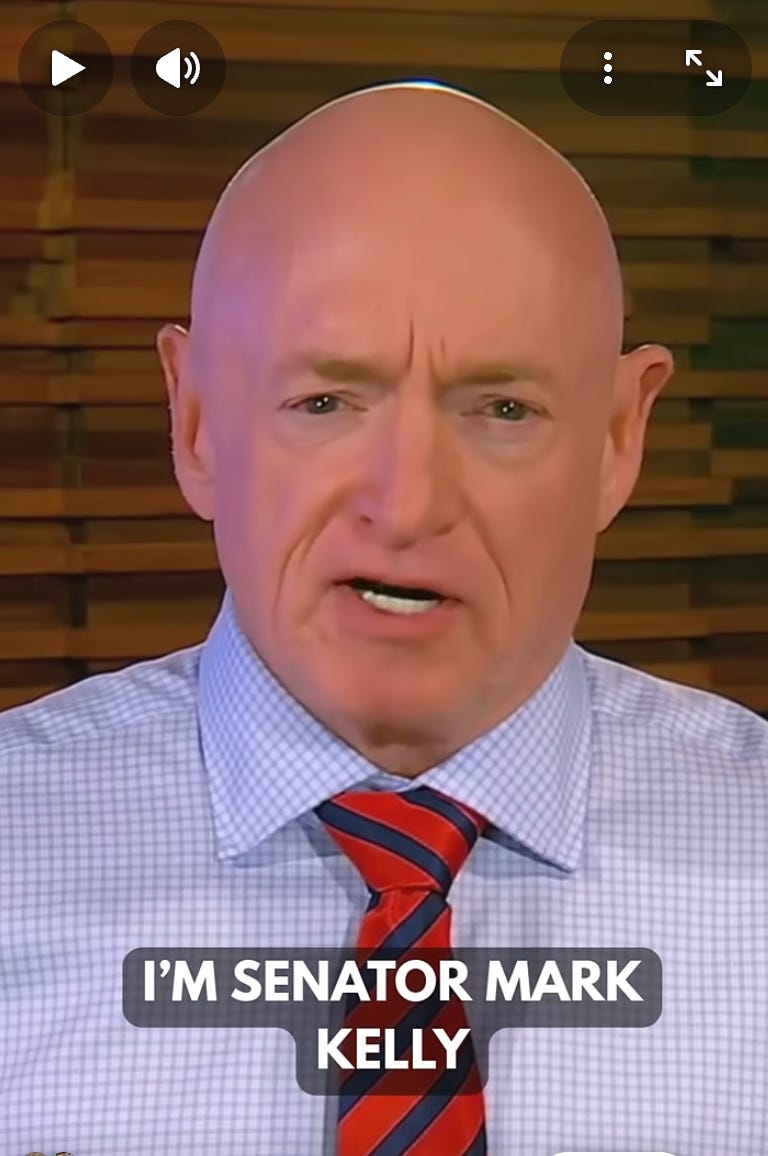
https://youtube.com/shorts/Fk9Gh3qwW4I?si=FzLNhHsA25vp9_Gs
On November 18, 2025, Senator Mark Kelly of Arizona — a retired Navy captain, a combat veteran, a 25-year officer in the United States Navy — appeared in a short video alongside five colleagues, all of them with military or national security backgrounds. The message was unambiguous, and unremarkable: you are not required to follow clearly illegal orders. The principle has been settled law since Nuremberg. It is codified in the Department of Defense's own Law of War Manual. It is taught at every service academy in this country.
For stating it, Pete Hegseth came after him with the full weight of his office.
The Secretary of Defense sent Kelly a formal letter of censure on January 5, 2026, falsely claiming Kelly had advocated “resistance to lawful orders.” He threatened to reduce Kelly’s retirement rank and pension — clawing back benefits earned over a quarter century of service. He suggested Kelly could face criminal prosecution. The administration called the group the “Seditious Six.” The President posted on Truth Social that their statement constituted “SEDITIOUS BEHAVIOR AT THE HIGHEST LEVEL.”
A federal judge — appointed by George W. Bush — blocked all of it. Senior Judge Richard J. Leon issued a preliminary injunction on February 12, finding the censure and threatened penalties incompatible with the First Amendment. The government appealed. Oral argument before the D.C. Circuit is scheduled for May 7.
And so we arrive at a question that would have been unthinkable a generation ago: can a Secretary of Defense punish a retired officer — who also happens to be a sitting United States Senator with constitutional oversight responsibility for the Pentagon — for accurately restating the law?
Hegseth says yes.
Seventy-three former admirals, generals, and service secretaries who served under presidents of both parties say no — and they say much more than that.
What the Former Military Leaders’ Brief Says
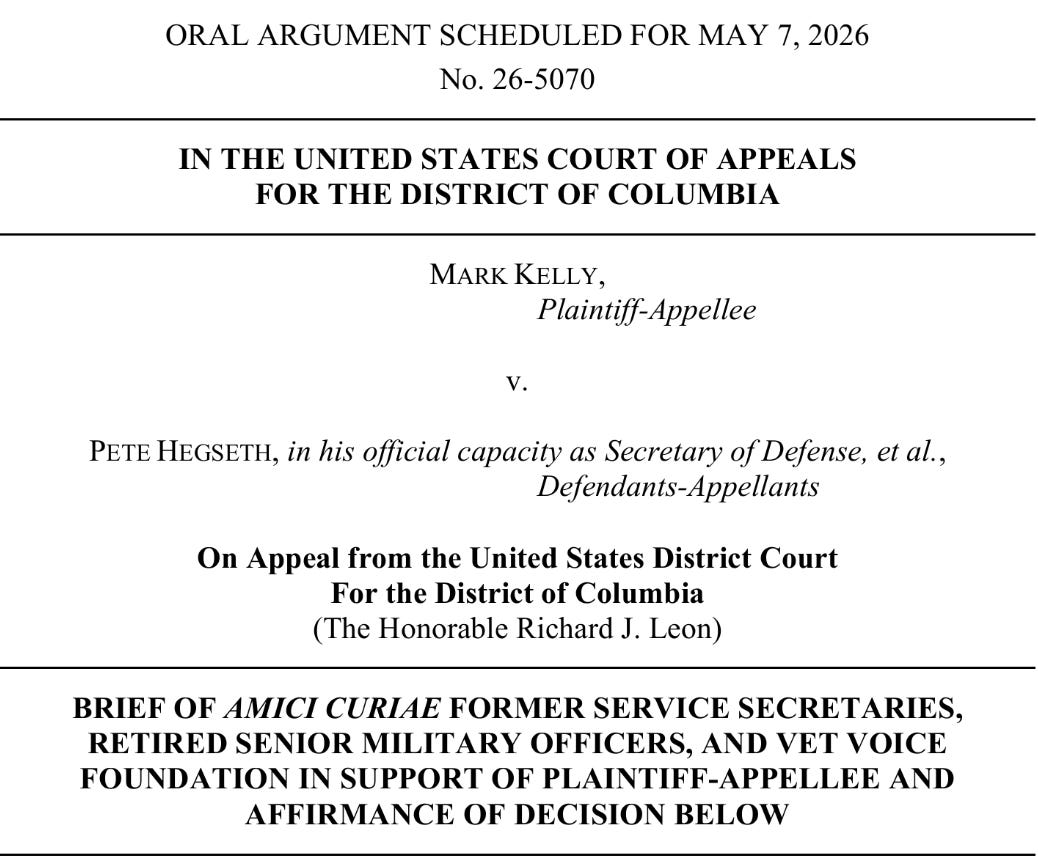
The amicus brief filed on April 17, 2026, by former secretaries of the Army, Navy, and Air Force — along with retired senior officers including four-star generals and admirals who led Pacific Command, European Command, the Coast Guard, and the CIA — is a document that deserves careful reading. It is short, precise, and carries the accumulated weight of careers that span from Eisenhower to Trump.
Its central argument is not just legal. It is existential.
“Amici are aware of many fellow veterans who would participate in public debate, but are declining to do so today, fearing official reprisal.”
That single sentence is damning. Not because it reveals something new about the administration’s character — we know what this administration does to people who speak plainly — but because of who is saying it. These are not critics from outside the military tradition. These are the people who built the modern American military. And they are telling the D.C. Circuit that Hegseth’s actions have already succeeded in silencing voices the country needs to hear.
The brief makes three arguments, and each one matters.
First: Veteran participation in public life is foundational to democratic self-governance. To threaten veterans with pension reduction and criminal prosecution for political speech is to deprive the public of a category of informed perspective on national security that no one else can provide.
Second: The duty to disobey illegal orders is not a fringe position or a partisan talking point. It is settled law, forged through catastrophe and affirmed by every major legal institution that has addressed it. The brief walks through United States v. Calley, the Manual for Courts-Martial, the DoD Law of War Manual — all of which establish that servicemembers are obligated to refuse clearly unlawful orders, and that following such orders is no defense.
And here is a detail worth pausing on: when Pam Bondi was still a private attorney and not yet the Attorney General (now former), she filed a brief before the Supreme Court of the United States explicitly stating that “military officers are trained not to carry out unlawful orders ... servicemembers are required not to do so.” The principle Kelly restated on video is the same principle Bondi endorsed in a federal court filing.
Third: The UCMJ’s limited speech restrictions for active-duty personnel simply do not reach what Kelly said or who he is. The government’s theory — that retirees accepted speech restrictions as part of an implicit deal for retirement benefits, and that Hegseth can revoke those benefits when he disagrees with what they say — has no serious legal precedent. The cases the government cites require an actual, demonstrated nexus between speech and military mission or environment. They require a “direct and palpable connection” to cognizable harm. As the brief notes with controlled precision: there is none here.
But There Is a Deeper Problem
Here is what I want you to hold in mind as you consider what Hegseth is trying to do.
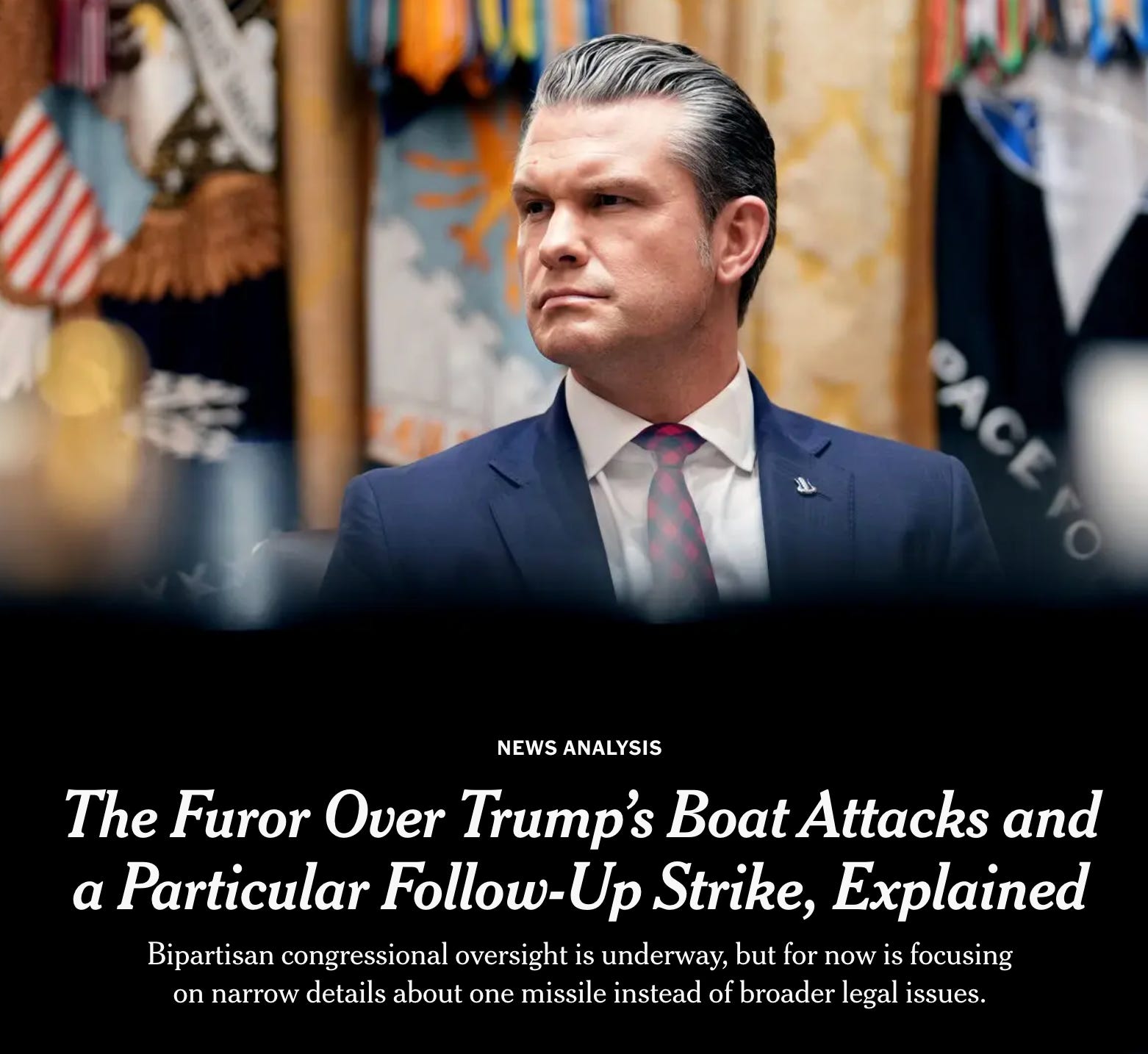
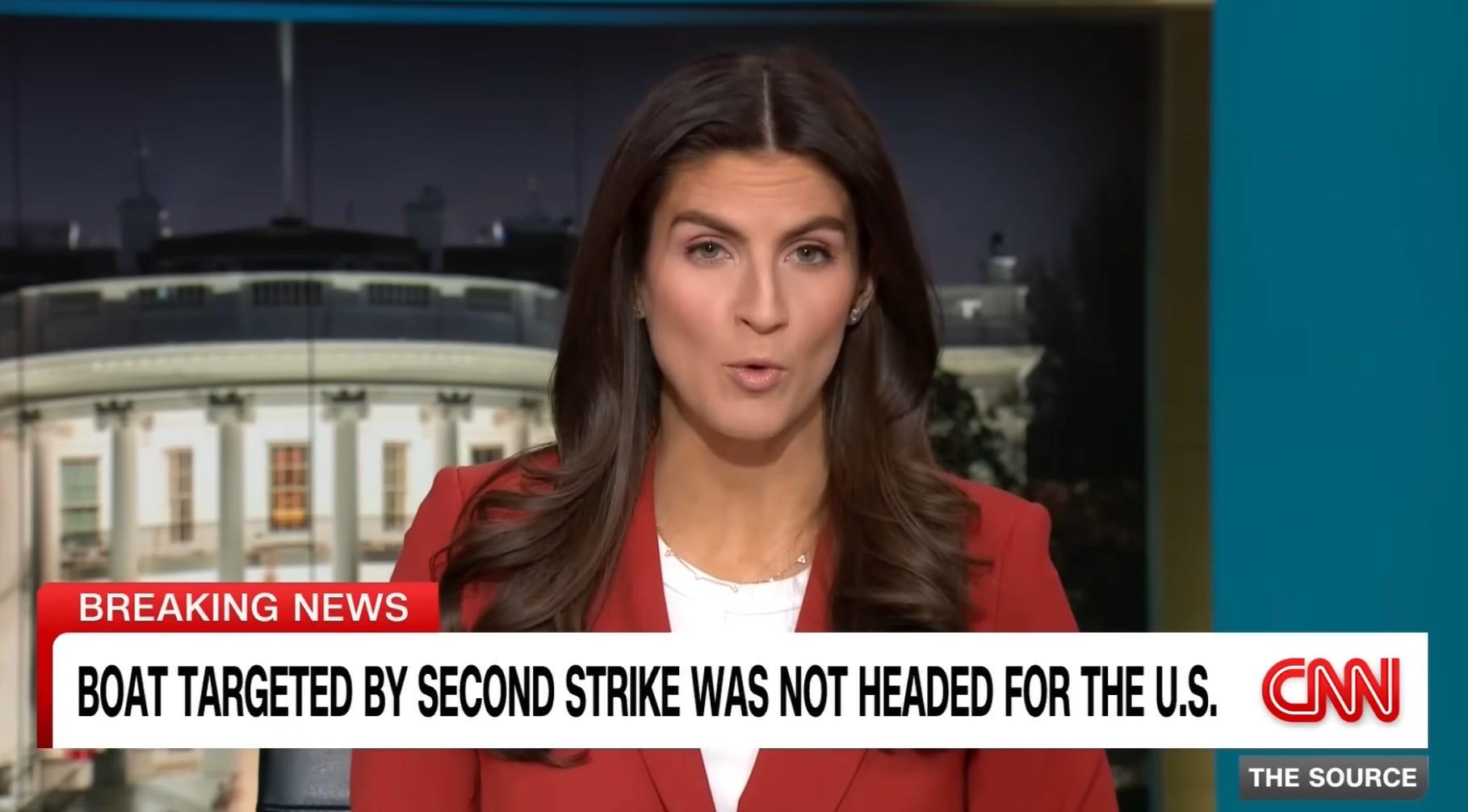
In September of 2025 — months before the Kelly video, months before the censure letter — the United States military conducted a strike on a suspected drug boat in the Caribbean. There were survivors. A second strike was conducted. Even some Republican politicians expressed concern.
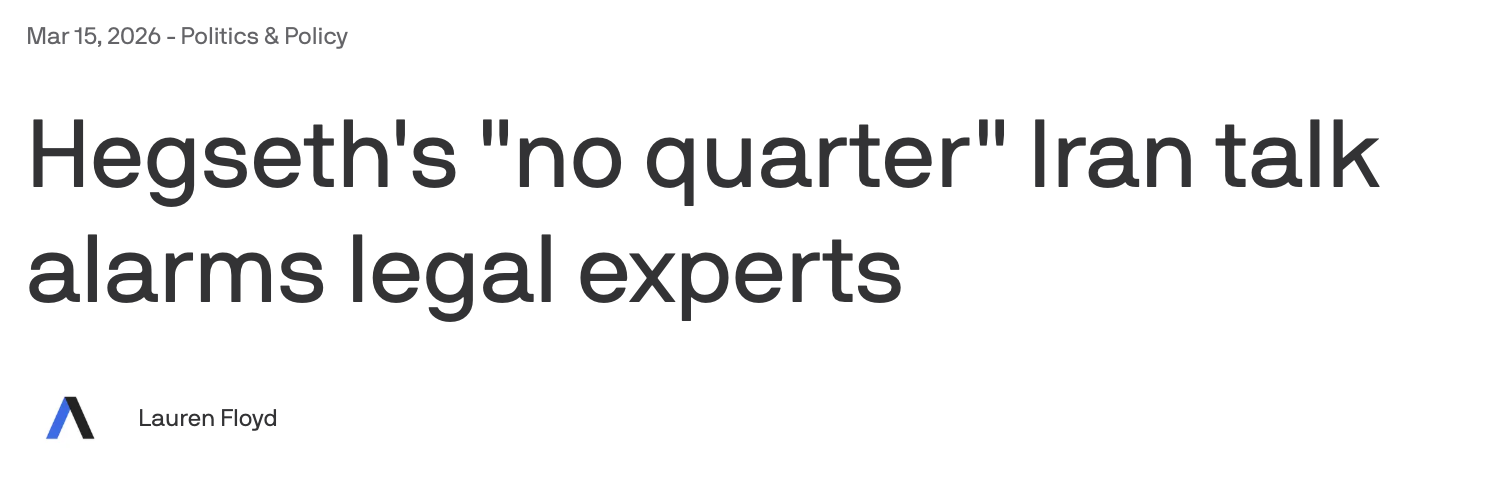
Then, in March of this year, Secretary Hegseth told a briefing room that the U.S. military would provide “no quarter, no mercy for our enemies.” Threatening “no quarter” — meaning the refusal of mercy to a surrendering enemy — is, on its face, a violation of international law. The laws of armed conflict do not treat that as aspirational language.
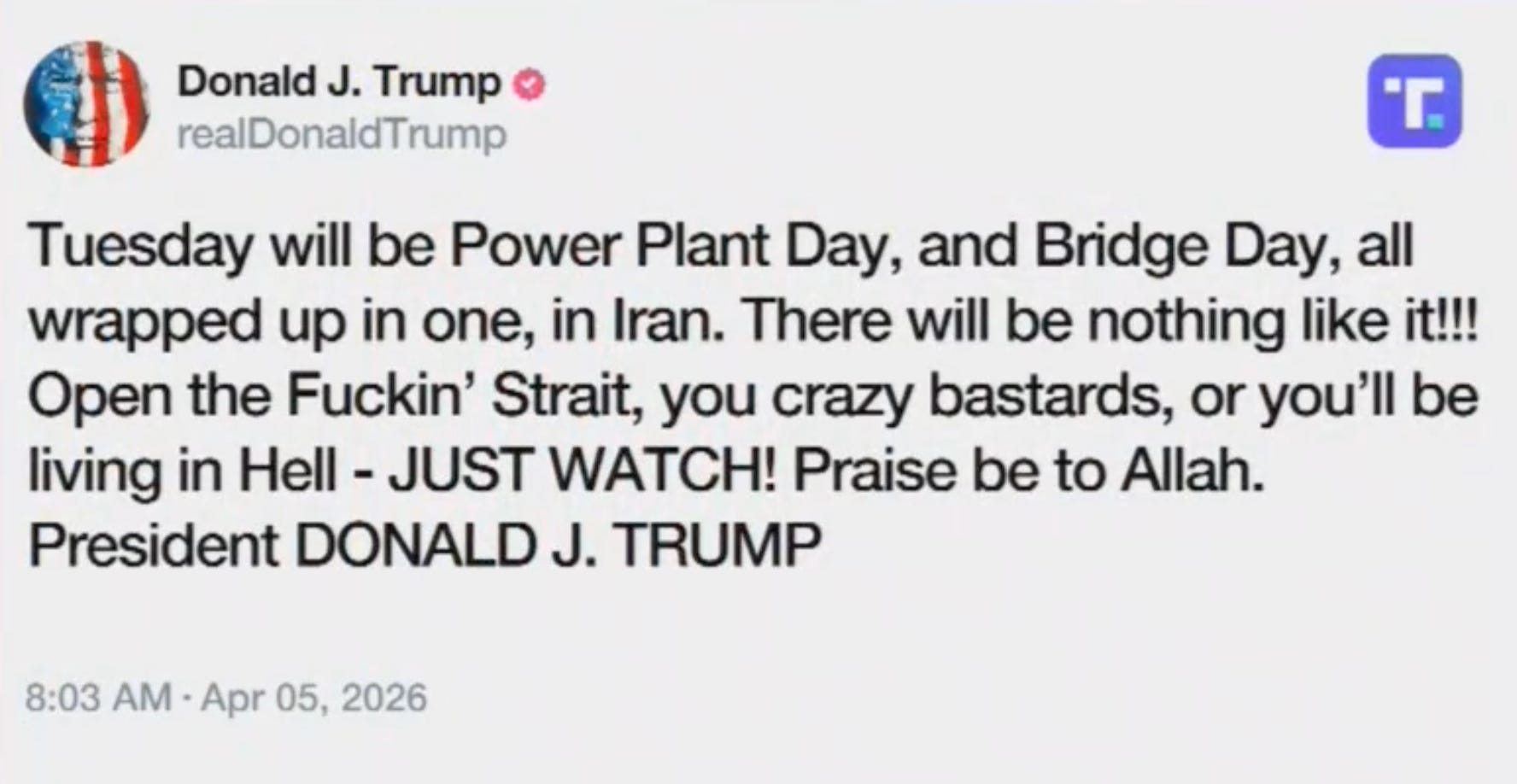
Then, on Easter of all days, the President posted on Truth Social that “Tuesday will be Power Plant and Bridge Day” in Iran, calling for destruction of civilian infrastructure and invoking threatening “Hell.”
The civilian harm mitigation office at the Pentagon — which had 200 people — was gutted to fewer than 40 under Hegseth. JAG lawyers were fired. The institutional architecture that keeps American military conduct within legal bounds has been systematically dismantled.
Now ask yourself: what exactly should SENATOR Mark Kelly say? What exactly should CITIZEN Mark Kelly say? What exactly should RETIRED NAVY CAPTAIN Mark Kelly say?
In addition to his current role, Kelly was an officer of the United States Navy — retired, yes, but sworn to the Constitution for 25 years. He is watching institutional safeguards dissolve and he was — and is — speaking to the people who remain inside the chain of command.
And Hegseth moved to strip him of the retirement he earned over 25 years of service.
The Moral Argument
Legal arguments can sometimes obscure the moral ones. Let me be direct.
What Hegseth is seeking to accomplish — if the D.C. Circuit reverses Judge Leon’s injunction — is the establishment of a principle that retired military officers can be financially and professionally punished for accurately stating that American servicemembers are not required to commit crimes.
Think about what that principle requires you to believe.
It requires you to believe that the Secretary of Defense should have veto power over the constitutional speech of a sitting United States Senator — one who sits on the Senate Armed Services Committee and has oversight responsibility over the Secretary’s own department.
It requires you to believe that 73 former admirals, generals, and service secretaries who served this country across a dozen administrations have no legitimate voice on matters of military law and national security.
It requires you to believe that the specific content of Kelly’s speech — the legal principle that illegal orders may not be followed — is somehow dangerous to military order and discipline. Not the illegal orders themselves. The speech about them.
That is an inversion of everything the American military tradition stands for.
The word “unprecedented” is used often and sometimes too loosely in our current moment. Here it earns its place. No Secretary of Defense in the history of this republic has attempted to use the UCMJ as a tool to silence a sitting member of Congress for oversight speech. No administration has seriously argued that retired officers — men and women who left active service years or decades ago — are permanently gagged on questions of military policy under pain of pension reductions.
The brief also notes, with a candor that should give everyone pause, that the 73 signatories understand that submitting the amicus brief — that merely disagreeing with Hegseth on the record — “may be viewed with disfavor by the Secretary.”
They said it anyway. That is moral courage. It is leadership in its pure form: people who understand the risk and act anyway, not because it is safe, but because the alternative is silence.
What Comes Next


The D.C. Circuit panel will hear the argument on Thursday (May 7). The three judges — Henderson (Bush 41), Pillard (Obama), and Pan (Biden) — will be weighing several overlapping questions: whether the Parker v. Levy line of cases extends to retirees, whether the unconstitutional conditions doctrine blocks Hegseth’s benefits-for-silence theory, whether the Speech and Debate Clause independently immunizes Kelly’s statements.
Judge Leon’s preliminary injunction turned on a finding that Kelly was likely to succeed on the merits and that the balance of harms favored protection. That analysis will get fresh scrutiny from the circuit.
But the legal contest, important as it is, should not obscure what is already true regardless of how the case resolves.
This administration attempted to silence a combat veteran senator for restating settled law. It tried to use pension clawback as an instrument of political retaliation. It called legal guidance “sedition.” And in doing so, it already chilled enough other veterans away from public speech that 73 of their colleagues felt compelled to say so, under their own names, in a federal court filing.
The amicus brief closes with a reminder that veteran participation in public discourse “dates to the earliest days of our republic.” The people who fought for independence were, by the time they entered public life, veterans. The tradition of the citizen-soldier who serves and then speaks — who carries the experience of war back into democratic life as a form of accountability — is not incidental to American self-governance. Does the name George Washington ring a bell?
That is what Hegseth is trying to punish.
The district court was right. The circuit should affirm.
I’m glad you’re here. I’m grateful you’re engaged. Here and everywhere. — James
This is a great piece. Thank you.